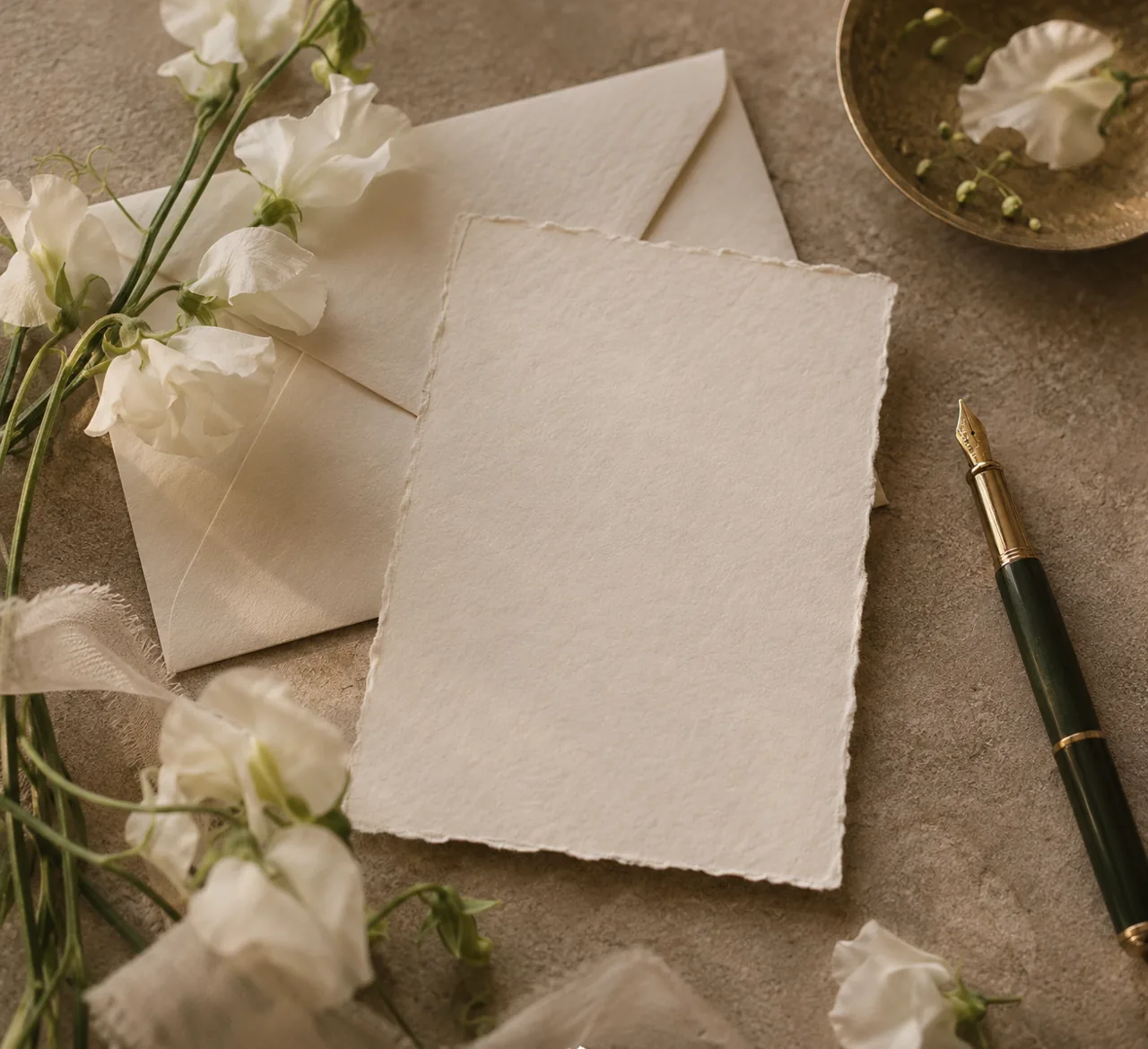
A thoughtful wedding card needs only three things: a warm congratulations, a personal detail and a wish for the couple's life together. Address both partners, choose a tone that fits your relationship and sign clearly. A few sincere sentences will usually mean more than a borrowed paragraph that does not sound like you.
The examples here are original starting points. Change names, details and phrasing to suit the people receiving them. You do not need to summarize their entire relationship or offer marriage advice. The card is a moment of encouragement, not a performance or a prediction about the future.
A simple structure for a personal message
Begin with “Congratulations to you both” or another greeting you would naturally say aloud. Add one true observation: their generosity as hosts, their shared humor or your happiness at seeing them build a life together. Close with a wish that feels relevant, then sign your name.
For example: “Congratulations, Maya and Alex. I love how you make everyone around you feel included. Wishing you a home full of good conversation, patient mornings and many reasons to celebrate. With love, Sam.” The observation is what makes the note personal; the rest simply supports it.
Draft on scrap paper first if you are worried about space. Read the message aloud and remove words you would never normally use. Check spelling, especially a partner's name or a new surname. Do not assume either person has changed their name unless they have told you.
Formal wedding wishes
A formal message is useful for a colleague, a distant relative or a couple whose preferences you do not know well. It can be warm without implying a closeness that does not exist. Use the names shown on the invitation rather than guessing titles.
- Congratulations on your marriage. Wishing you a joyful life together, with friendship at its center.
- With warmest wishes as you begin this new chapter. May the years ahead bring kindness, laughter and shared purpose.
- It is a pleasure to celebrate your wedding. Wishing you both lasting happiness and many meaningful adventures.
- Please accept our heartfelt congratulations and our best wishes for the life you are building together.
Avoid language suggesting that one partner has “won” or “finally settled down.” A polished card treats both people as equal participants in the celebration and leaves assumptions about their future out of the message.
Casual wishes for friends
Write like yourself, with a little extra care. A small joke is welcome when both partners will enjoy it, but private stories involving former relationships, embarrassing behavior or family conflict belong elsewhere. A card may be reread by more people than you expect.
- So happy for you two. Here is to brilliant adventures, ordinary Tuesdays and always being on the same team.
- Your wedding is a wonderful excuse to say how much you mean to us. We are cheering you on today and in all the everyday moments ahead.
- Congratulations, favorite people. May your home always have room for laughter, good food and the friends who love you.
- What a joy to celebrate this day with you. Wishing you years of small kindnesses and big, happy memories.
If you know one partner much better, include the other directly. “I have loved watching your friendship grow” is more inclusive than writing an entire note to your friend and adding “and your spouse” at the end.
Messages for family
Family notes can acknowledge history without claiming ownership of the couple's choices. Celebrate the relationship they have chosen and the people they are now. Keep childhood memories affectionate, brief and appropriate to share with both partners.
For a sibling: “Growing up with you gave me a lifetime of stories. Seeing you begin this chapter with someone who brings you such joy is another one I will treasure. Congratulations to you both.”
For an adult child: “We are so happy to celebrate the life you are creating together. May you always find friendship, respect and a safe place to be yourselves in one another. With all our love.”
For a new relative: “We are delighted to celebrate with you and grateful for the warmth you bring to our family. Wishing you both a marriage shaped by kindness and shared happiness.”
Let the message leave room for complicated family structures. “We are happy to share this day” can be more comfortable than making sweeping claims about everyone becoming one perfect family.
Short messages for a small card
- Together looks lovely on you. Congratulations to you both.
- Wishing you a lifetime of friendship and everyday joy.
- So much love for this new chapter of yours.
- May your life together feel welcoming, adventurous and entirely your own.
- Celebrating you today, and cheering for all that comes next.
A short message is complete when it feels sincere. You can add a longer personal letter separately if the card is tiny or if your words are best read privately after the celebration.
Blessings and heartfelt wording
Use religious language when you know the couple would welcome it. If you are unsure, a secular wish for peace, patience or love can carry the same warmth. Do not use the wedding card to introduce beliefs the couple has not chosen to share.
For broader wording inspiration, MessageBlessings publishes wishes and blessing collections. Choose language that fits the couple, then add a detail of your own; a general collection should be a starting point rather than a substitute for your relationship.
An original secular blessing might read: “May your home be a place of rest, your conversations leave room for understanding, and your happiest moments be made brighter by sharing them.” For spoken words, see our ceremony ideas.
Card etiquette and delivery
Write both partners' names on the envelope and include your own full name inside, particularly at a large wedding. Follow the couple's instructions for gifts and cards. If you cannot attend, send your congratulations without making the note primarily about your disappointment.
Avoid discussing the cost of a gift or asking when children will arrive. Our modern etiquette guide covers those broader guest questions. Couples organizing the event can use the planning checklist to assign a secure place for cards.
Frequently asked questions
Is “best wishes” appropriate?
Yes, when it sounds natural to you. “Congratulations to you both” is also a straightforward, inclusive opening.
What if I have never met one partner?
Address both people and keep the message warm. Say you look forward to getting to know them rather than inventing a shared memory.
Can I include humor?
Yes, if both partners will appreciate it. Avoid jokes about divorce, obedience, former partners or the supposed burden of marriage.
What if the card is late?
Send it anyway. A brief acknowledgment and sincere congratulations are enough; there is no need for a lengthy explanation.
Back to top ↑