A romantic wedding ceremony feels meaningful when its words, setting and pace reflect the people getting married. Begin with what you want to promise and who you want to include. Flowers and music can support that meaning, but they cannot replace it. Choose a few intentional elements and leave enough quiet space for people to absorb them.
Before designing the ceremony, confirm requirements with your officiant and the relevant local authority or religious institution. An inspiration guide cannot establish what makes a marriage legally valid in your location. Treat the personal script and the necessary formalities as connected tasks that both deserve attention.
Give the ceremony a clear emotional shape
Think in three movements: welcome, promises and celebration. A welcome helps guests settle and understand why they are gathered. The promises provide the center. A final declaration or closing sends everyone into the next part of the day with a sense of completion.
Write a simple running order before choosing readings. This reveals whether several elements perform the same job. You might discover that a long welcome, two relationship stories and three readings delay the vows without adding much meaning.
There is no perfect ceremony length for every couple. Read the actual script aloud, including pauses and music cues, rather than estimating from a page count. A shorter ceremony can feel substantial when each element has a reason to be there.
Choose a setting that helps people listen
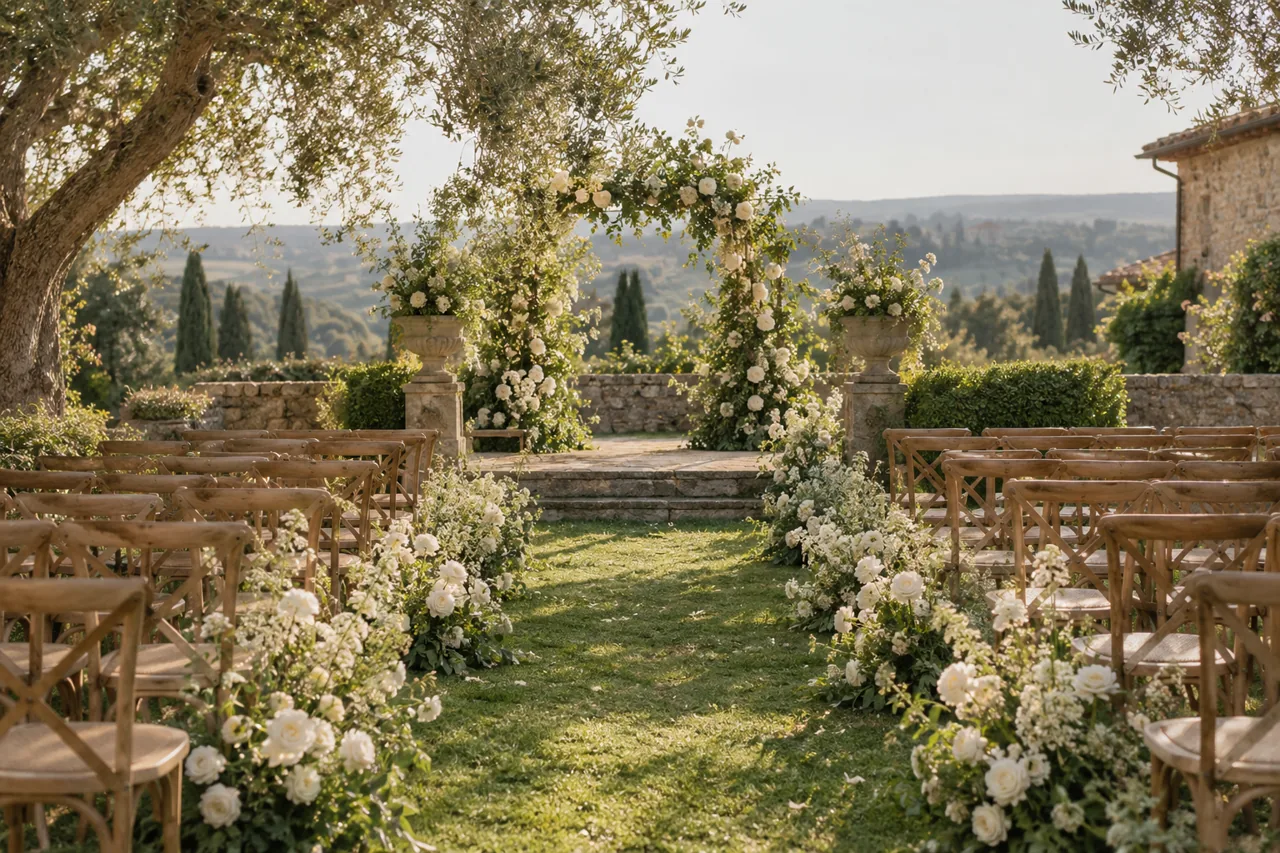
Frame the place where you will stand without blocking sightlines. A low floral arrangement, an existing tree or a window can provide a focal point. Tall arrangements may look impressive but make it harder for guests to see the vows.
Walk the aisle in the shoes and clothing you expect to wear, or a practical equivalent. Check steps, uneven ground and the space needed for mobility aids. Provide seats for people who cannot stand comfortably even if most guests will remain standing briefly.
Ask about microphones and a sound check. An intimate gathering can still need amplification in wind or an echoing room. Test where you will speak, not merely whether the equipment turns on. Our planning checklist helps coordinate those details with the venue.
Write vows that sound like promises
Start with one brief observation about your relationship, then make commitments you understand and intend to keep. “I promise to listen before trying to solve everything” is more concrete than a series of grand claims about perfection.
Agree on approximate length and tone together. You can keep the wording private while avoiding a mismatch between a few playful lines and a long formal speech. Decide whether humor belongs in the vows and whether any topics should stay private.
Write a clean printed copy in a readable size. Practice aloud slowly and mark where you naturally breathe. Do not rely exclusively on a phone that may lock, dim or display notifications. Keep a spare copy with someone who knows the ceremony order.
Choose readings with a purpose
Ask what a reading contributes: a shared value, a family connection or an image that explains how you see partnership. One carefully selected passage can say more than several unrelated favorites. Your reader should be comfortable with the words and willing to participate.
Check the source and attribution before printing an excerpt. Online quote graphics frequently detach words from their original context. Consider copyright and permissions for publication or recorded distribution, particularly if you plan to post a ceremony film publicly.
Original words are another option. A friend could offer a short reflection, but agree on boundaries and length in advance. For language you can adapt to a written message, see our wedding card guide. A private card and a public reading need different levels of intimacy.
Let music mark transitions
Choose music for arrival, the entrance, a reflective pause and the departure only where it serves the ceremony. You do not need continuous sound under every spoken word. Silence can make a promise feel more present.
For recorded tracks, identify the precise start point and how the music ends. Give one person responsibility for playback and a backup method. Test downloads beforehand rather than relying on a streaming connection at the venue.
Live musicians need a clear running order and signals. Discuss what happens if the procession takes longer than expected. A familiar piece can be arranged in several ways, so listen to the actual version rather than choosing by title alone.
Invite family without making participation compulsory
A relative might read, escort someone, carry rings or simply sit in an honored place. Offer roles privately and make declining easy. A shy person does not need a public task to prove how much they care.
In blended families, ask people what wording feels comfortable rather than assuming labels. If children participate, give them a simple role and a nearby adult who can help. Prepare for them to change their minds without turning the moment into a problem.
Acknowledge absent loved ones with care. A brief mention, a flower or a private pause may be enough. Discuss emotionally difficult elements together so the ceremony does not surprise one partner at a vulnerable moment.
Use symbolic rituals thoughtfully
A shared candle, handfasting or another ritual should have meaning you can explain in your own words. Learn its context and consult the relevant community or officiant when it belongs to a cultural or religious tradition. Do not treat sacred practices as interchangeable decorative ideas.
Practical details matter too: open flames may be restricted, wind may extinguish candles and small objects can be hard to handle. Rehearse the action and choose a simple alternative if it introduces unnecessary stress. Our intimate wedding guide explores personal participation in smaller settings.
A ceremony preparation checklist
- Confirm legal and religious requirements with the appropriate people.
- Read the full script aloud and agree on tone.
- Verify readings, attribution and any necessary permissions.
- Test microphones, music and transition cues.
- Confirm seating, access and the weather alternative.
- Give printed copies and the running order to a named helper.
Frequently asked questions
Can we write our whole ceremony?
You can develop personal elements, but confirm required wording and formalities with your officiant and the relevant authority before finalizing the script.
Do vows need to be the same length?
They need not match exactly. Agree on a general range and tone so both people feel comfortable with the balance.
How many readings should we include?
Choose the number that serves the ceremony. One or two distinct readings can be enough; time the complete script before adding more.
What makes a ceremony romantic without being sentimental?
Specific words, thoughtful pacing and sincere promises. You can be warm and affectionate without using ornate language or sharing private experiences publicly.
Back to top ↑