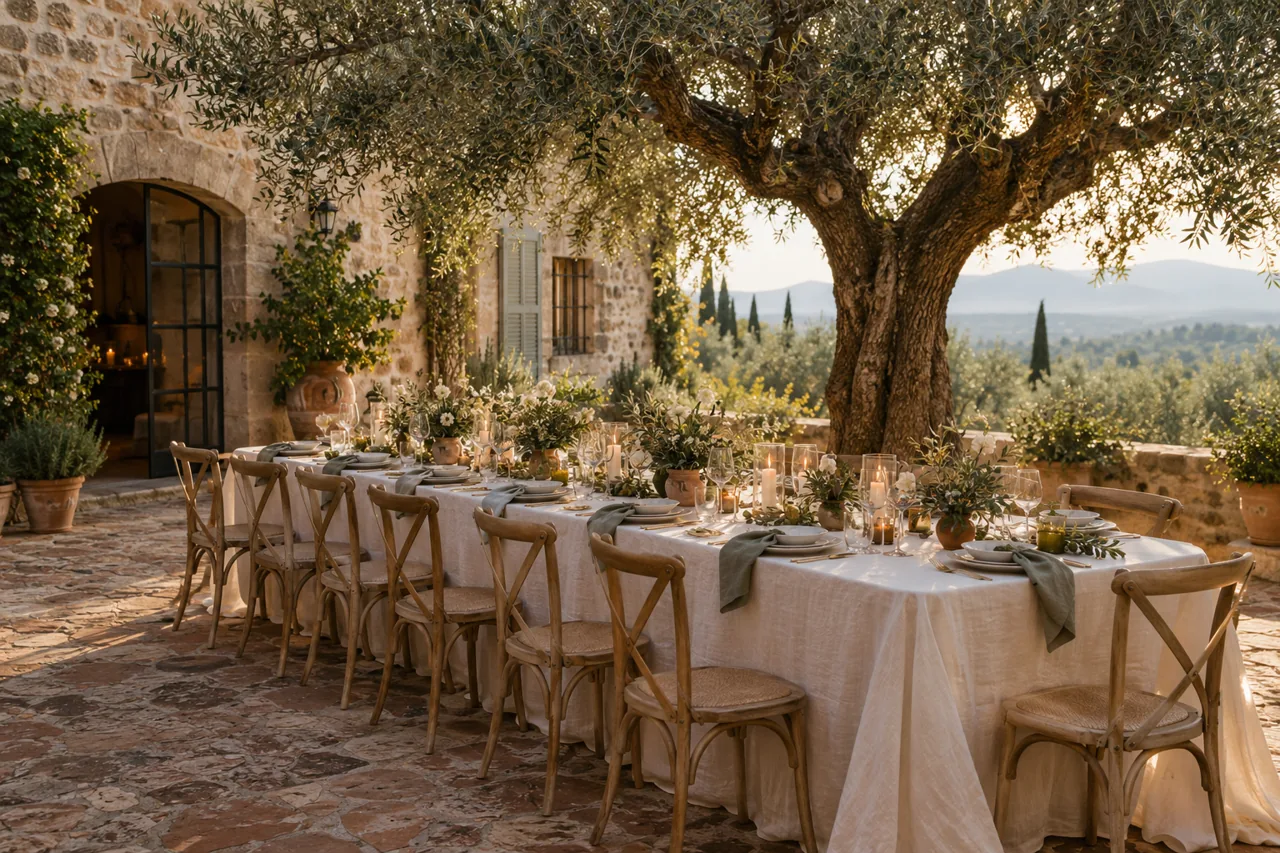
An intimate wedding feels personal when the size of the gathering matches the experience you want to share. Start with the people you cannot imagine celebrating without, then choose a setting that lets them connect comfortably. A smaller head count is a design choice, not a promise of a tiny budget or a pressure-free planning process.
There is no universal attendance limit that turns a wedding into an intimate one. A dinner for twelve and a weekend for forty can both offer closeness. What matters is having time to acknowledge guests and enough structure that the day feels welcoming rather than improvised.
Decide what a smaller wedding makes possible
List the experiences you gain by reducing attendance: one shared table, a longer ceremony, a private dining room or a meal with several courses. Name the experiences you might lose too, such as a large dance floor or including every extended relative. Discuss those tradeoffs before announcing plans.
Small weddings can lower some variable costs, but venue minimums, photography and music may not shrink with the guest list. Ask for a complete proposal based on your actual plans. A private restaurant buyout might cost more than a simple community venue even with fewer people attending.
Use our planning checklist to keep fixed commitments separate from optional enhancements. Protect the expenses that make your chosen experience possible and resist spending merely to compensate for a smaller event.
Build a guest list with an understandable boundary
Choose a consistent principle together. You might invite immediate family and closest friends, or the people you both regularly spend time with. A clear boundary is easier to explain than a long account of why one cousin was included and another was not.
Discuss partners, children and caregivers before finalizing names. Someone's essential support person is a practical consideration, not a decorative extra seat. Think about guests who would travel alone or know nobody else, and make room for a humane decision rather than applying a rule mechanically.
When questions arise, say something simple: “We are keeping the ceremony and dinner very small, and we appreciate your understanding.” Avoid promising a later party unless you genuinely plan to host it. Private disappointment does not require a public debate about your relationships.
Choose a venue that suits the actual group
Visit with the room arranged for a similar number of guests. A large ballroom can feel empty with a single table, while a private dining room may create warmth without much decoration. Ask to see the wet-weather option and the route between ceremony and dinner.
Look beyond photographs. Check bathroom access, acoustics, heating or cooling, chair comfort and staff space. A rental home may have restrictions on events, noise or outside suppliers. Confirm permission in writing rather than assuming that overnight capacity also means permission to host a wedding.
Ask about minimum spending and exclusive use. If other diners will be present, understand how your ceremony, speeches and music will coexist. Privacy matters most at the moments when you want everyone to hear one another.
Give the ceremony its own shape
A small gathering can support personal vows, a reading by a friend or a brief acknowledgment of absent loved ones. Keep participation optional. Not every guest wants to speak publicly, and closeness does not remove the need for consent.
Seat guests so they can see and hear comfortably. An informal semicircle can work well, but leave a clear aisle and accessible route. Amplification may still help outside or in a space with echo. For specific ideas, explore our romantic ceremony guide.
Build in a pause after the ceremony. A few minutes to greet guests, have water and take photographs is often more enjoyable than immediately moving everyone into the next formal activity.
Plan dinner around conversation
A single long table can be beautiful, but consider who can hear across it. Several smaller tables may work better for guests with hearing difficulties or for an uneven room. Place people with shared interests near one another without isolating anyone who arrived alone.
Speak with the caterer about dietary needs and service pace. Shared platters can encourage conversation, but individually served meals may be easier where allergies or mobility are concerns. Explain the atmosphere you want and let the service team suggest a workable arrangement.
Music should support conversation at dinner. If you want dancing afterward, create an intentional transition with a lighting change, a short announcement or a different musical set. A small crowd needs permission to move more than it needs an enormous dance floor.
Personal touches worth the effort
Write each guest a short note explaining why you are glad they came. Offer a familiar family recipe with the meal, or display a few meaningful photographs with clear context. Choose details that reveal something about your relationship rather than simply adding names to objects.
A modest welcome station can replace individually packed gifts. Water, useful local information and a clearly displayed schedule often solve more problems than souvenirs. Our welcome bag guide includes low-waste alternatives for overnight guests.
A practical intimate-wedding checklist
- Agree on a guest-list principle before sharing invitations.
- Check total minimum spending rather than per-person pricing alone.
- Confirm event permission, privacy and weather alternatives.
- Map comfortable seating, accessible routes and meal service.
- Choose one or two personal details with clear owners.
- Plan the final departure and cleanup, even for a restaurant dinner.
Keep the weekend manageable
Additional events multiply hosting responsibilities. You do not need a welcome dinner, morning activity and farewell brunch simply because the group is small. If you suggest optional plans, distinguish them clearly from hosted events and explain who pays.
Leave downtime for guests and for yourselves. Travelers may want to rest, explore independently or manage children between events. A thoughtful itinerary offers clear anchors while allowing people to step away without feeling they have missed the wedding.
Frequently asked questions
Is a small wedding automatically cheaper?
No. Some costs vary with attendance, while others are fixed or subject to minimum spending. Compare complete proposals for the event you actually want.
How do we avoid hurting people we cannot invite?
Use a consistent boundary and explain it warmly without ranking relationships. Keep invitations private and avoid discussing detailed plans with people who are excluded.
Do we need entertainment for twenty guests?
Not necessarily. A well-paced meal, a few voluntary speeches and a comfortable gathering space can be enough. Choose music or activities that suit the group.
Can we skip a traditional wedding party?
Yes. Friends can support you without matching clothing, a formal title or a procession. Explain any specific help you would appreciate and make it easy to decline.
Back to top ↑